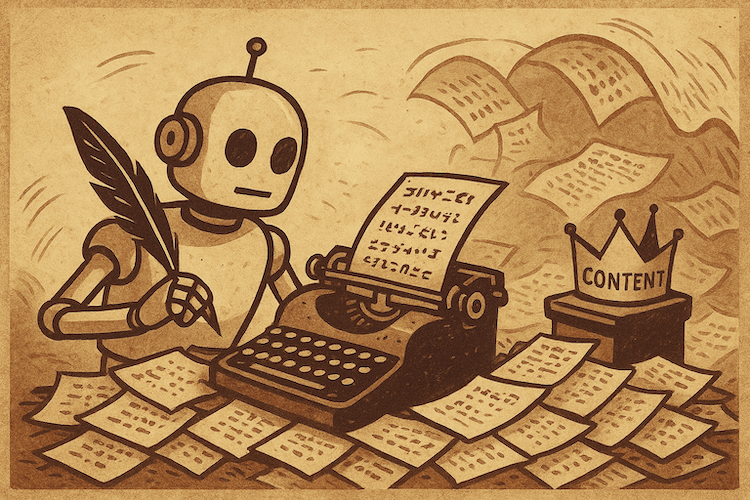
TL;DR - As AI floods the web with machine-made content - increasingly trained on its own output - quality, originality, and trust are all at risk. We can’t stop it, but we can navigate it: stronger digital literacy, shared ethical guidelines, clear disclosure, and treating AI as augmentation rather than a replacement for human creativity.
For years, I’ve worked in the content field and firmly believed that “content is king.” But lately, I’m beginning to question whether that still holds true. More and more, I see tweets and YouTube videos focused less on creating meaningful work and more on monetization at all costs.
With the rise of AI-generated content-trained on existing online material and now producing vast amounts of its own-I can’t help but wonder: what will the internet look like in five years if it’s flooded with untrustworthy, machine-made information? Let’s explore the challenges AI-generated content presents and how we might navigate this rapidly changing landscape.
The Decline of Content Quality
The internet has long been filled with advice on “getting rich online,” but this often sidelines quality. Originality, research, and authenticity are already in decline. AI-generated content amplifies the problem by producing massive volumes of material that may never meet the standards we once expected.
The Training Conundrum
AI models learn from existing online data. But what happens when AI starts feeding on its own output? If biased, shallow, or false material keeps circulating, the internet could devolve into a feedback loop of misinformation. That risk makes it urgent to consider the long-term consequences of relying heavily on AI-generated text.
The Overwhelming Volume
Every day, billions of bytes of data flood the web-social media posts, blogs, videos, and forums. Adding AI into this firehose raises an important question: how do we tell human voices apart from machine voices? And does that distinction even matter once the signal is buried under the noise?
The Human Touch
Despite its impressive capabilities, AI can’t replicate the richness of human experience. People bring emotions, lived perspectives, and creativity that resonate in ways machines cannot. While AI can assist and accelerate the process, it lacks the depth and context that make human-created content truly valuable.
Navigating the Future
If AI-generated content is here to stay, the challenge is learning how to live with it responsibly. A few steps stand out:
- Emphasize Digital Literacy: Critical thinking, fact-checking, and source evaluation should be core digital skills.
- Establish Ethical Guidelines: Developers, publishers, and content creators need shared frameworks for responsible use and disclosure of AI-generated content.
- Augmentation, Not Replacement: Treat AI as a tool to enhance human creativity and productivity, not a substitute for it.
- Transparent Disclosure: Content produced by AI should be clearly labeled so readers know what they’re engaging with.
Conclusion
AI-generated content brings opportunities-but also risks that can’t be ignored. Declining quality, unreliable training data, and overwhelming volume demand careful consideration. By combining responsible AI use with a renewed appreciation for human creativity, we can steer this new era toward integrity rather than chaos.
The question isn’t just whether we’re ready for AI content. It’s whether we’re prepared to defend what makes human expression worth reading in the first place - the same lived experience and hard-won skill that outlasts even the code we write.